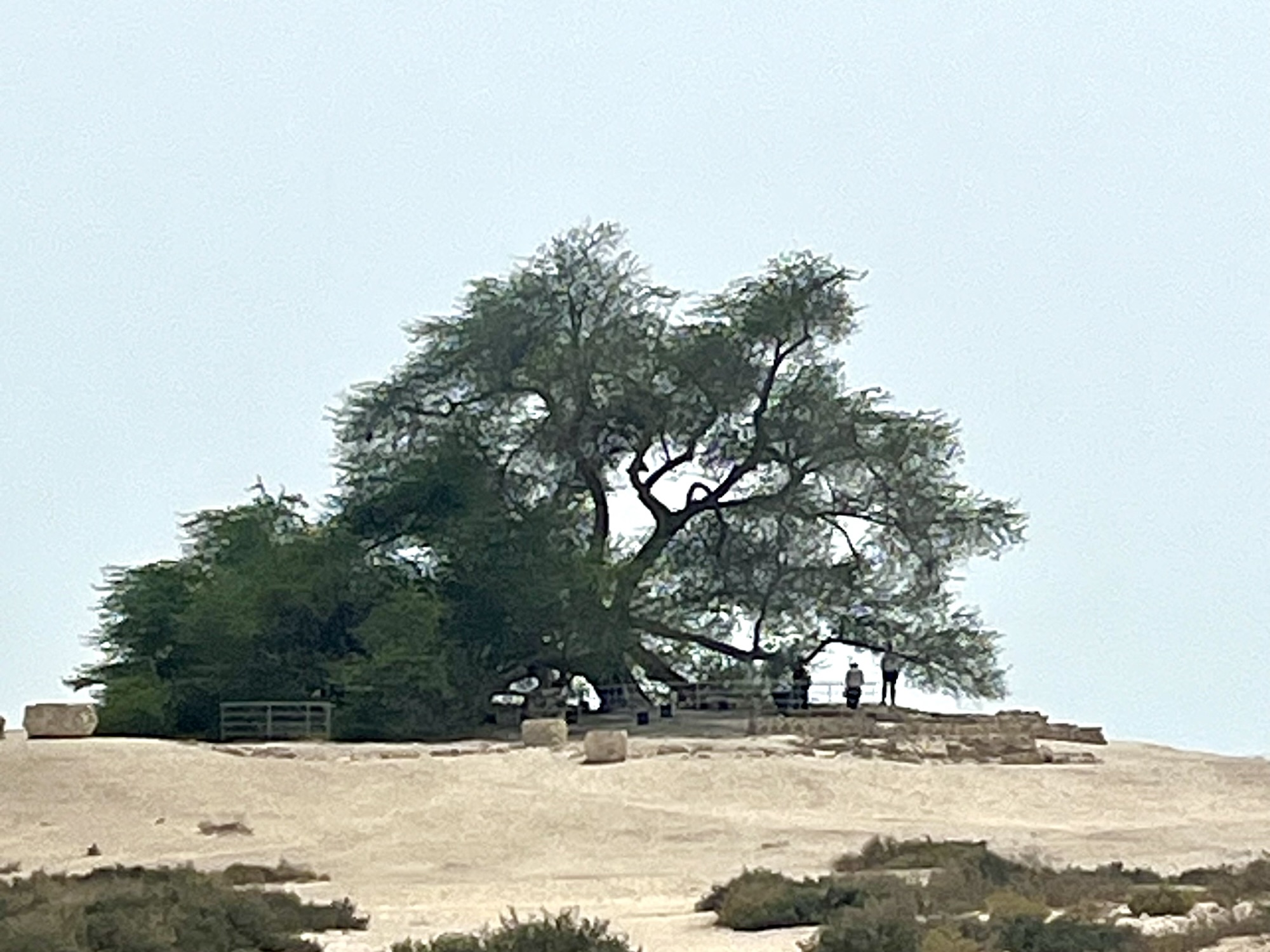
My skin feels dry in this arid climate. It isn’t unpleasantly hot like it will be in a few months but none-the-less my leg sticks to the seat in the early afternoon heat. The drive out to the tree is enjoyable as my friend and I catch up on all the things that have happened in our lives since the last time we met up somewhere in the world.
Once off the freeway, the signs of civilization become fewer and fewer. We’ve entered an oil field. The colors of the shrubs seem almost muted. As if they are reserving their energy in this desert. They carry the same sort of yellowish hue that I see all over the Gulf. I am not sure if the muted yellowish green is a result of the heat and lack of water or perhaps it is a dusting of the sand that seems to permeate all of life here.
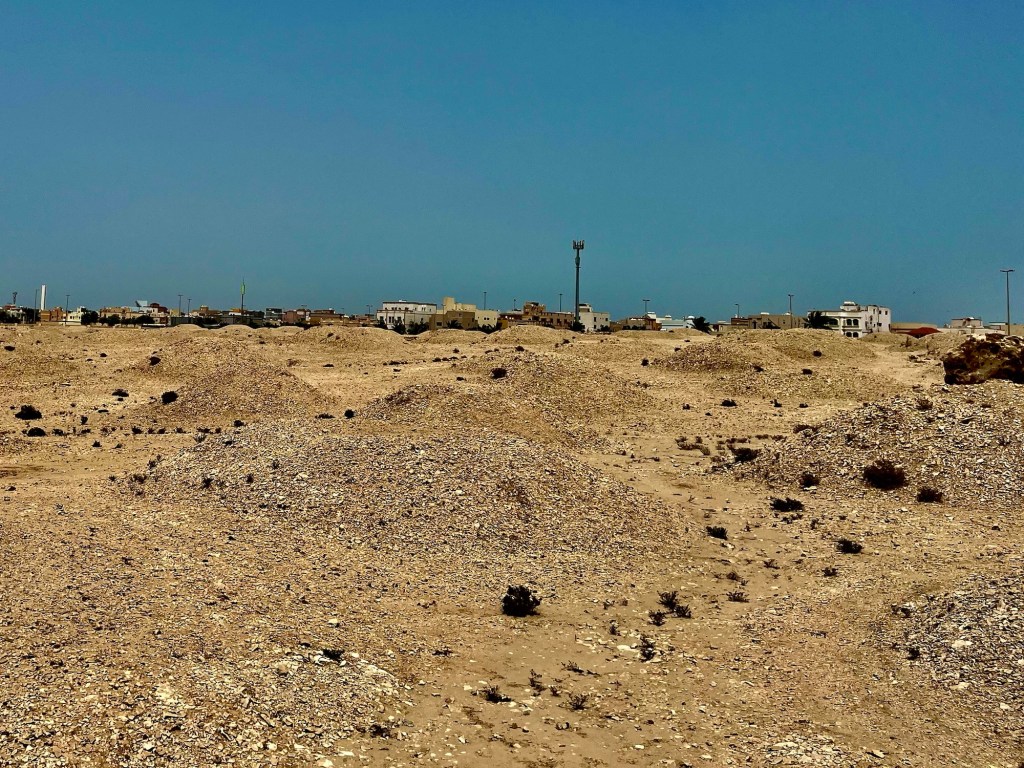
It is hard to tell where the road ends and the desert begins. I wonder if we are forging our own path despite this being an established tourist stop. Perhaps the average visitor isn’t coming from the ancient burial mounds that our tour guide tried to talk us out of seeing. “It is just a big pile of sand” he says, “better to go to the mall.”
Imaginably the burial mounds are mundane to him, something he drives by on his way to meet friends. But for us, it is something unique and different about this place. Starting in 2200 BCE and for hundreds of years people flocked to Bahrain at the end of their lives, or with their loved one’s remains in tow, to be buried under these mounds and in a place found sacred for the two different waters that flow together.
He stops the car, seemingly without pulling over, and I wonder at his decision to park here. To my untrained eye, I cannot differentiate between this spot and the rest of our surroundings – road or otherwise. I pop my hat on my head in a vein attempt to diminish the strength of the sun above and start walking towards the tree we have come all this way to see.
Much of the vegetation in this part of the world is ringed by thin rubber tubes feeding it desalinated water. You see smaller shrubs that are pushing through adversity to live on their own merit but the larger trees and things need an assist from man to stay alive. This tree, out in the middle of the desert, appears to be the exception. With very little rain fall and no underground water known of, it is a marvel this tree not only lives, but is the size that it is.
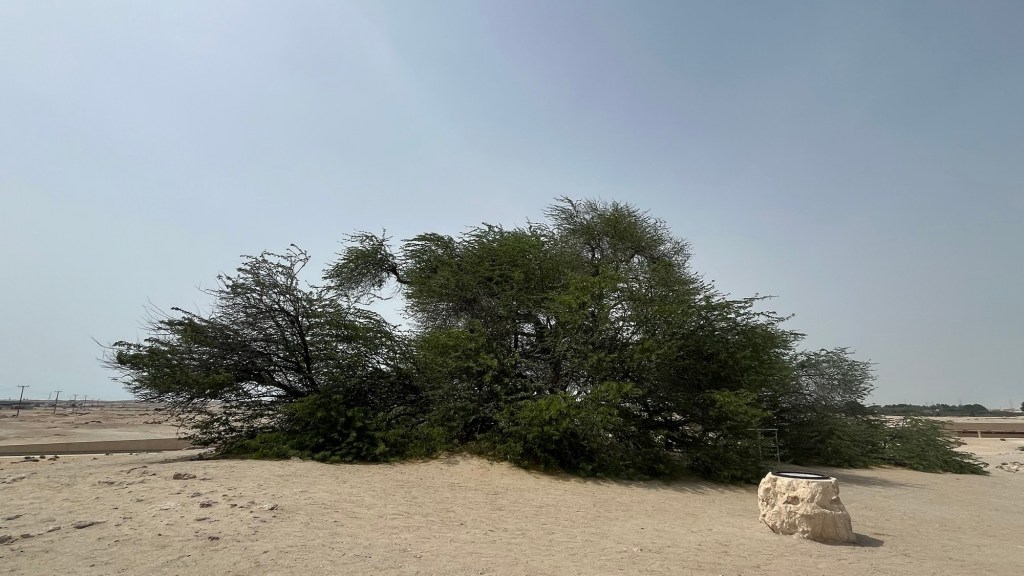
The Tree of Life is estimated to be nearly 450 years old but artifacts found in the area date back to 4500 B.C. The wingspan of the tree is impressive and the dark green hue of the tree’s leaves speak to how miraculous this tree is. I can’t help but wonder about the people who lived here when the tree was planted. Or the community that predated it by thousands of years. Some believe it was planted when this was a military outpost. I wonder if it was intended to give shade. Or perhaps meant to provide firewood to soldiers that will cook their meals over open flame. A species indigenous to Asia, could someone have deliberately carried it all the way here for planting? This tree has grown to symbolize resilience and hope, living despite adversity, in the Arabian desert. Many believe it has magical powers.
The archetype of The Tree of Life can be found in many spiritual traditions. It is considered a symbol of the interconnectedness of all of life, the cycle of one’s own life, or the manifestation of the eternal. As I walk around this physical tree, taking in its beauty and the miracle of its continued life, I ponder its relationship to its environment. People worry it is showing signs of decline, pointing to different reasons for it – some cite the impact of the tourists’ cars, others the oil fields that surround it, still others say as with all living things it too will come to an end. What does it mean for mankind if a Tree of Life comes to its end? Or am I assigning undue meaning to a tree?
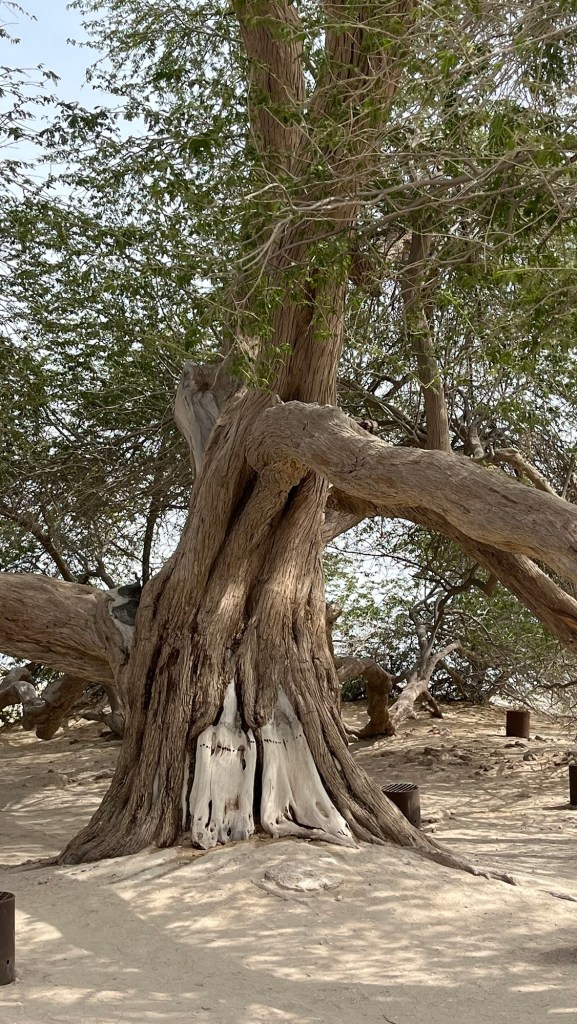


Oh Kelly. I love this last picture. It looks like a prayer. Sharon
LikeLike
Pretty amazing tree and it has a feel of spirituality. 💕Mom Sent from my iPhone
LikeLike